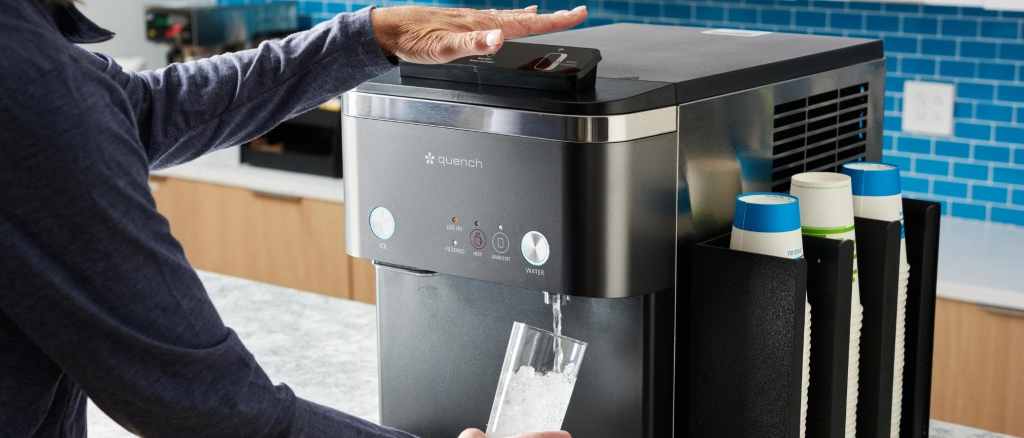
Water coolers with a hot and cold water function typically use an electric heating element to heat water inside a dedicated reservoir. Temperature controls regulate the heating process so a supply of hot water is ready when someone uses the dispenser.
The hot and cold sides of the machine operate separately. This allows a single water cooler to keep chilled water cold while maintaining another supply at a much higher temperature.
How does a hot water dispenser work?
The process begins when water enters the dispenser. Depending on the machine, that water may come from a bottle or directly from the building’s potable water supply.
From there, a portion of the water is directed to the hot-water system. The machine heats it and holds it at its designated temperature until someone is ready to use it.
Water enters the dispenser.
In a bottled cooler, the water supply comes from the attached jug. Bottleless systems receive water through a direct connection to the building’s water line.
Filtered bottleless dispensers treat the incoming water before it reaches the appropriate temperature-control system.
Water moves into the hot water reservoir.
Water intended for heating is directed into a dedicated reservoir. This keeps it separate from the water being chilled elsewhere in a hot-and-cold dispenser.
The size and design of the reservoir vary by machine. Its capacity affects how much hot water is available for use at one time.
The heating element warms the water.
Inside the hot-water system is an electric heating element. When activated, it raises the temperature of the water in the reservoir.
The concept is similar to other electric appliances that heat water, although the components and operating temperatures are specific to the dispenser.
A thermostat regulates the temperature.
Once the water reaches the appropriate temperature, the dispenser doesn’t need to keep heating it at full power.
A thermostat monitors the temperature and controls the heating cycle. When the water cools below the machine’s set range, the system can activate again to bring it back up to temperature.
Hot water is dispensed.
When someone activates the hot-water control, heated water moves from the reservoir to the dispensing outlet.
The machine then needs to prepare the water, replacing what was used. This cycle allows the dispenser to maintain a ready supply throughout normal workplace use.
How do water coolers make hot and cold water at the same time?
A hot-and-cold water dispenser maintains separate temperature zones within the same machine.
The cold side uses a refrigeration system to remove heat from the water. The hot side relies on its heating element and temperature controls.
Keeping the supplies separate allows employees to choose their preferred temperature without waiting for the machine to heat or chill each cup.
The exact internal design varies between models, but the basic principle remains the same. Each temperature function has its own job within the dispenser.
Does a water cooler heat water instantly?
It can certainly feel instant when you press the button, but many water coolers aren’t heating room-temperature water on the spot.
Instead, the dispenser keeps water heated inside its reservoir. When you want hot water, you’re accessing the supply that has already reached its operating temperature.
After some of that water is dispensed, the machine prepares the incoming replacement supply. If demand is particularly high, the system may need time to recover before its full hot-water capacity is available again.
Recovery time depends on the individual dispenser, so check the model specifications if this is important for a busy workplace.
How hot does water from a water cooler get?
There isn’t one temperature that applies to every hot water dispenser.
Operating temperatures vary by model, and some machines may offer different temperature settings. The specifications for the individual dispenser are the best source for its actual hot-water range.
This is worth checking when comparing workplace water coolers. A team that regularly uses the dispenser for hot beverages may have different temperature needs from a workplace primarily interested in chilled drinking water.
Do bottleless water coolers make hot water?
Some do. Bottleless describes the machine’s water source rather than its available temperatures.
A bottleless dispenser works by connecting to the building’s potable water supply. In a filtered system, incoming water is treated before moving through the rest of the machine.
Models equipped for hot water can then direct some of that water to the heated reservoir. Other water can be chilled or kept at ambient temperature, depending on the dispenser.
Does a hot water cooler use more electricity?
Heating water requires electricity, so the hot-water function contributes to the dispenser’s overall energy consumption.
How much it contributes depends on the machine and workplace demand. Reservoir capacity and the dispenser’s energy-management features can also affect consumption.
This makes it difficult to assign one electricity figure to every hot water cooler. Businesses concerned about energy use should compare specifications for the individual models they’re considering. For more detail, here’s how much electricity a water cooler uses and what affects it.
Are hot water coolers safe?
Hot water needs to be treated with care regardless of where it comes from. Water dispensed at elevated temperatures can cause burns.
Some water coolers include controls intended to reduce accidental hot-water dispensing. The exact safety features depend on the water dispenser model, so users should become familiar with the machine’s operating instructions.
Employees should also avoid placing their hands beneath the outlet while activating the hot-water function.
What can you use hot water from a water cooler for?
Having hot water ready at the dispenser can be particularly useful in a workplace break room.
Employees can use it for tea or other hot beverages without waiting for a separate kettle to heat. Depending on the machine’s temperature capabilities, it may also be suitable for certain instant drink mixes.
Check the dispenser’s specified temperature range before assuming its water is suitable for any use requiring a specific minimum temperature.
Why isn’t my water cooler making hot water?
A lack of hot water doesn’t always mean the heating system has failed.
First, check the dispenser’s operating instructions. Some machines have a separate control for the hot-water function, and a newly installed or recently restarted unit may need time to reach its operating temperature.
An energy-saving setting can also affect when certain functions operate on models equipped with one.
If the dispenser has power and is configured correctly but still isn’t producing hot water, it may need service. Avoid opening the machine or attempting to repair its electrical heating components yourself. If heating problems keep coming back, it may be worth weighing repair against replacement based on how long water coolers last.
FAQ.
Does a water cooler boil water?
Don’t assume that hot water from a dispenser is boiling. Water coolers heat water to the operating range established for the individual machine.
Check the product specifications to find the exact temperature a particular dispenser can reach.
Is hot water always stored inside the water cooler?
Many hot water coolers maintain heated water in an internal reservoir so it’s ready when someone needs it.
Designs can vary, so the specifications for the individual machine should be used when determining how its hot-water system operates.
Why does a water cooler have separate hot and cold tanks?
Keeping the supplies separate allows the dispenser to maintain very different temperatures simultaneously.
Water intended for chilling can remain in the cold side of the system while the hot reservoir maintains its own heated supply.
Can you turn off the hot water on a water cooler?
That depends on the dispenser. Some models provide separate controls for temperature functions, while others operate differently.
Follow the instructions for the individual machine when turning its hot-water feature on or off, including before you clean a water cooler, since some manufacturers recommend switching off or unplugging the unit first.
Bring hot water convenience to the workplace.
A hot-and-cold water dispenser can make a shared hydration station more useful throughout the workday. Employees have chilled drinking water available when they’re thirsty and convenient access to hot water for warm beverages.
Culligan Quench offers bottleless hot and cold water dispensers for Canadian workplaces, with various capacities and filtration options.
Explore Culligan Quench water solutions or speak with a Water Expert to find a dispenser that suits how your workplace uses hot and cold water.
Recommended products
Culligan Quench has an advanced suite of point-of-use systems that are designed to meet the needs of workplaces of all shapes and sizes. Here are some products we recommend for your business.
570 Bottleless Water Cooler
Vivreau® Freestanding Main Bottler
 High
 Hot
 Cold
 Ambient
 Extra Hot
 Sparkling

Q10 Bottleless Water Cooler With Sparkling Water
Includes Firewall® UV Protection
High
Hot
Cold
Ambient
Extra Hot
Sparkling
Top pick

Q12 Touchless Bottleless Water Cooler
Available with quenchWATER+ electrolyte water
 Commercial
Hot
Cold
Ambient
Extra Hot
Sparkling
Top pick

Q14 Bottleless Water Cooler
Available with quenchWATER+ electrolyte water
Commercial
Hot
Cold
Ambient
Extra Hot
Sparkling
Top pick

Q3 Bottleless Water Cooler
Available with quenchWATER+ electrolyte water
 Standard
Hot
Cold
Ambient
Extra Hot
Sparkling

Q4 Touchless Bottleless Water Cooler
Available with quenchWATER+ electrolyte water
Standard
Hot
Cold
Ambient
Extra Hot
Sparkling

Q5 Bottleless Water Cooler
Available with quenchWATER+ electrolyte water
High
Hot
Cold
Ambient
Extra Hot
Sparkling

Q8 Touchless Bottleless Water Cooler
Available with quenchWATER+ electrolyte water
High
Hot
Cold
Ambient
Extra Hot
Sparkling
Q9 Bottleless Water Cooler
Includes Firewall® UV protection
High
Hot
Cold
Ambient
Extra Hot
Sparkling

Replacement Filter for Bottleless Water Cooler
Model P02800 1 micron lead reduction block filter
High
Hot
Cold
Ambient
Extra Hot
Sparkling
