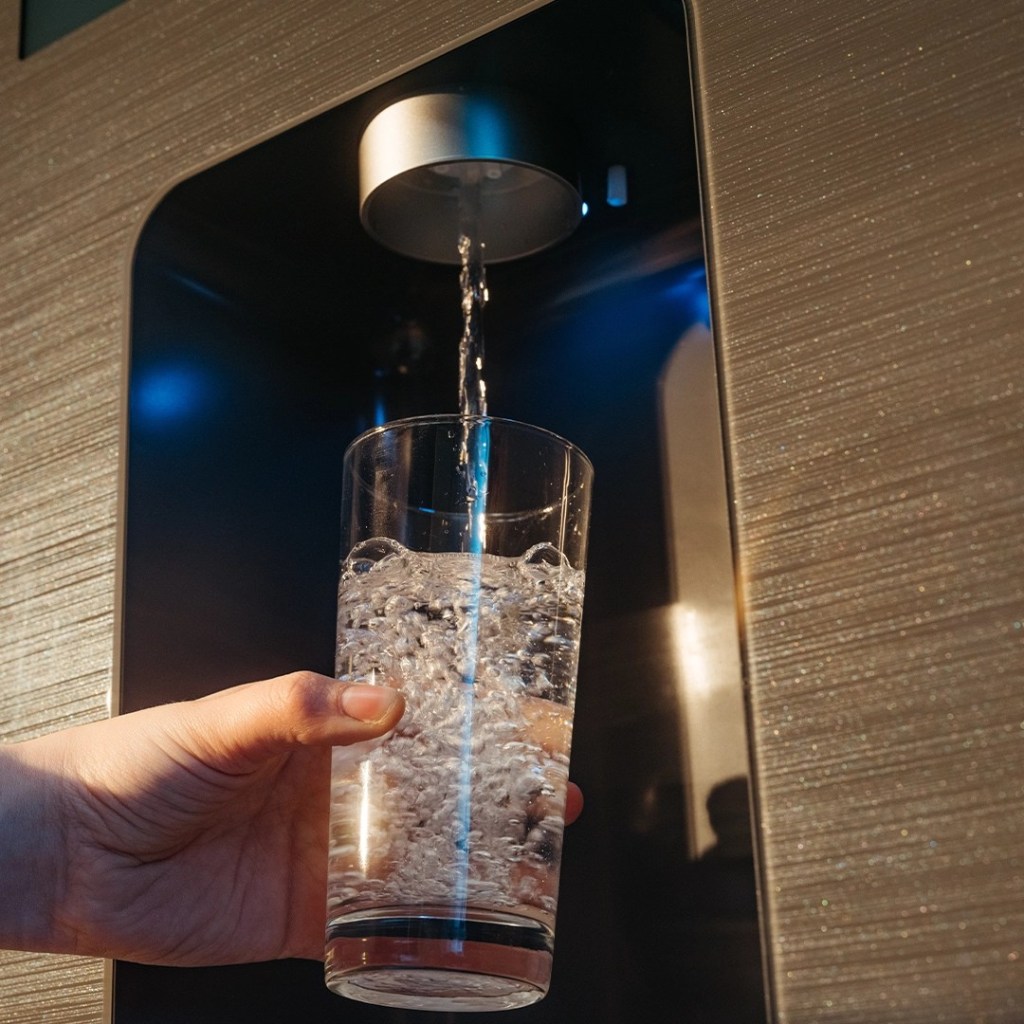
Bottleless water coolers connect directly to a building’s existing potable water supply, giving workplaces access to drinking water without relying on large replacement jugs. Water travels from the building’s water line into the dispenser, where it can be filtered and prepared for drinking.
Depending on the model, a bottleless water cooler may provide chilled, hot, or ambient water. Since the supply comes directly from the water line, the system replenishes itself as people use it.
What is a bottleless water cooler?
A bottleless water cooler is a point-of-use water dispenser that connects to an existing water supply. Instead of having a bottle sitting on top of or inside the machine, water reaches the dispenser through a dedicated connection.
Many bottleless systems also filter the incoming water before it reaches the user. This brings water treatment and dispensing together in one system.
Bottleless dispensers come in freestanding and countertop configurations, making them suitable for workplaces with different space and capacity needs.
How a bottleless water cooler works step by step.
The process begins with the same water supply already serving the building. From there, the dispenser handles the water before making it available to employees.
The cooler connects to the water supply.
During installation, the bottleless water cooler is connected to a potable water line. This gives the machine a continuous water supply without requiring bottles to be delivered or replaced.
The location of the connection and installation requirements depend on the workplace. A professional installer can determine how to connect the unit appropriately based on the space and existing water supply.
Incoming water is filtered.
Once water enters the dispenser, it passes through the filtration system specific to that model.
Different filtration technologies address different water quality needs. A system may use carbon filtration to reduce chlorine and improve taste and odor. Other workplaces may benefit from a more advanced treatment option, such as reverse osmosis.
Because filtration happens at the point of use, water is treated shortly before it reaches the dispensing stage.
Water is heated or chilled.
After filtration, water can move into the temperature-control portion of the dispenser.
For cold water, the cooler uses a refrigeration system to chill the water and maintain the desired temperature. Models with a hot-water option use a separate heating system so that hot water remains ready when needed.
The available temperatures vary between dispensers. Some units also provide ambient water for users who prefer it.
Filtered water is dispensed on demand.
Once the water has been filtered and brought to the appropriate temperature, it’s ready to drink.
The user activates the dispenser and water flows from the appropriate part of the system into their cup or reusable bottle. Depending on the model, dispensing may be controlled by a button, lever, or touchless technology.
As water is used, more enters through the connected supply. There’s no empty jug waiting for someone to notice and replace.
How does a bottleless water cooler filter water?
Filtration is built into the water’s path through a filtered bottleless dispenser. Instead of treating a large supply elsewhere and transporting it to the workplace, the system filters incoming water at the point of consumption.
The type of treatment depends on the filtration system.
Sediment filtration can capture larger particles in the incoming water and may serve as an early filtration stage. Activated carbon can reduce chlorine and substances that contribute to unwanted tastes or odors.
For workplaces with different water quality needs, reverse osmosis may be an option. RO systems use a semipermeable membrane to reduce total dissolved solids and specific contaminants, depending on the system’s capabilities.
Culligan Quench offers bottleless water coolers with a range of filtration technologies, allowing the appropriate setup to be selected based on the workplace and its incoming water.
Do bottleless water coolers need plumbing?
A bottleless water cooler does need access to a potable water line. That doesn’t mean every installation requires a major plumbing project.
The actual setup depends on where the dispenser will be located and the water connections already available in the building. A suitable installation point can often be identified based on the workplace’s existing infrastructure.
Professional installation also helps make sure the connection is set up correctly before the dispenser goes into regular use.
Bottleless vs. bottled water coolers.
The biggest operational difference between these systems is the way they receive water.
Bottled coolers depend on a finite supply inside each jug. When that water is gone, the empty bottle has to be removed and a full one installed. Extra bottles also need to be stored somewhere until they’re needed.
Bottleless water coolers draw from the building’s water supply. This removes bottle changes from the routine and keeps the dispenser supplied through its direct connection.
Filtration is another consideration. Bottleless systems can treat water at the point of use, while traditional bottled dispensers generally rely on water that was treated before bottling. Both types still require appropriate cleaning and maintenance.
What maintenance does a bottleless water cooler need?
Getting rid of water jugs doesn’t eliminate water cooler maintenance.
The parts of the dispenser people regularly interact with need routine cleaning. Drip trays should also be emptied and cleaned as needed.
Filtered systems require another type of upkeep. Filters need to be replaced according to the specific system’s requirements to ensure they continue performing as intended.
Internal sanitization and system inspections may be handled as part of professional service. Following the recommended maintenance schedule can also help identify issues before they interfere with normal use.
Benefits of bottleless water coolers for workplaces.
One of the most practical changes that comes with going bottleless is removing the jug from the equation. Staff doesn’t have to lift and replace heavy bottles, and businesses no longer need to dedicate space to storing a supply of them.
A direct connection also keeps water available throughout the workday without waiting for someone to replace an empty bottle.
For workplaces concerned about their incoming water supply, point-of-use filtration offers another advantage. The filtration system can be selected based on the water quality and treatment needs at that location.
Bottleless dispensers are also available with different temperature settings and footprints. This gives businesses flexibility when choosing a system for a particular space or number of users.
FAQ
Where does the water in a bottleless water cooler come from?
It comes from the building’s existing potable water supply. A dedicated water line carries water from that supply into the dispenser.
The water can then pass through the unit’s filtration system before being chilled, heated, or dispensed.
Do bottleless water coolers need electricity?
Models that chill or heat water generally require electricity to operate. Electronic dispensing controls and other powered features may also require electricity.
Power requirements vary by machine, so check the specifications for the individual model.
Do bottleless water coolers run out of water?
Bottleless water coolers don’t run out in the same way a bottled cooler does because there isn’t a finite jug attached to the machine.
They draw water from the connected building supply as needed. Individual dispensers still have their own capacity and recovery rates, which can affect how well a particular model handles periods of heavy use.
Do bottleless water coolers need filters?
Filtered bottleless water coolers use filtration as part of the point-of-use system. The type of filter depends on the machine and the water treatment needed.
Filters also need to be replaced according to their recommended service schedule.
Bring bottleless water to your workplace.
A bottleless water cooler turns the water supply already available in your building into a convenient workplace hydration source. Once installed, the system handles filtration and dispensing right where employees need it.
Culligan Quench offers Bottleless Water Coolers for workplaces across Canada, with countertop and freestanding options available for different spaces. Filtration and temperature features can also be tailored to your workplace’s needs.
Explore Culligan Quench bottleless water solutions or speak with a Water Expert to find a system suited to your space and water quality needs.
Recommended products
Culligan Quench has an advanced suite of point-of-use systems that are designed to meet the needs of workplaces of all shapes and sizes. Here are some products we recommend for your business.
533 Touchless Sparkling Water Dispenser
 Standard
 Hot
 Cold
 Ambient
 Flavour
 Sparkling
Top pick

555-T/565-T Sparkling Water Dispenser
 Commercial
Hot
Cold
Ambient
Flavour
Sparkling

565 Sparkling Water Dispenser
 High
Hot
Cold
Ambient
Flavour
Sparkling

580 Sparkling Water Dispenser
Commercial
Hot
Cold
Ambient
Sparkling
 Extra Hot

956 Freestanding Water Dispenser and Ice Machine
13.2 lbs storage
Standard
Hot
Cold
Ambient
 Tulip Ice
 Touchless

960-16/965-16 Water Dispenser and Ice Machine
16 lbs storage
High
Hot
Cold
Ambient
Nugget Ice
Touchless
Top pick

960/965 Water Dispenser and Ice Machine
7 lbs storage
Standard
Hot
Cold
Ambient
Nugget Ice
Touchless
Top pick

980-30 Water Dispenser and Ice Machine
30 lbs storage
High
Hot
Cold
Ambient
Nugget Ice
Touchless
Top pick

980-50 Water Dispenser and Ice Machine
50 lbs storage
High
Hot
Cold
Ambient
Nugget Ice
Touchless

980-90 Water Dispenser and Ice Machine
90 lbs storage
Commercial
Hot
Cold
Ambient
Nugget Ice
Touchless

Bevi Countertop Flavoured and Sparkling Water Dispenser
Standard
Hot
Cold
Ambient
Flavour
Sparkling
Top pick

Bevi Standup 2.0 Flavour and Sparkling Water Dispenser
High
Hot
Cold
Ambient
Flavour
Sparkling
Top pick

Twist Flavored Water Dispenser
Commercial
Hot
Cold
Ambient
Extra Hot
Sparkling
Top pick

Twist Flavour and Sparkling Water Dispenser
Commercial
Hot
Cold
Ambient
Flavour
Sparkling
Top pick
