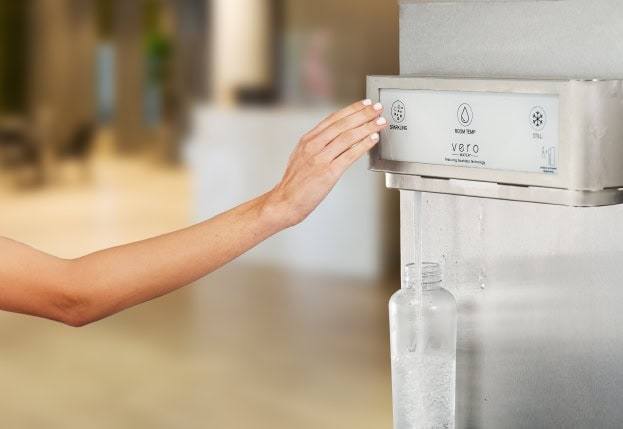
Water coolers need electricity for things like refrigeration and hot water, but the amount they use depends on the specific model. A dispenser that keeps both hot and cold water ready all day will use more energy than a simpler one with fewer features.
The size of the cooler and how much it’s used also make a difference. When comparing water coolers, it’s better to check each model’s specifications rather than use a single energy estimate for all dispensers.
How much electricity does a water cooler use?
Electricity use for water coolers is usually measured in kilowatt-hours (kWh), just like other appliances in your home or business.
There’s no universal amount of electricity that all water coolers use. A small dispenser for a few people will likely use less energy than a larger machine in a busy office.
The features included in a cooler also affect how much power it needs. To estimate energy use, review the machine’s specifications and consider how it will be used in your workplace.
What affects water cooler electricity usage?
Two water coolers might do the same job but still use different amounts of electricity. The machine’s design and how it’s used each day both play a role in energy use.
Heating and cooling.
Water coolers mainly use electricity to control temperature. The cooling system uses power to chill the water to the right level.
Heating water also uses energy. In hot-and-cold dispensers, an internal heater keeps hot water ready for anyone who needs it.
Cooler size and capacity.
How much water a dispenser can handle affects its energy use. A machine made for lots of people will use more energy than a smaller one for a quieter space.
That’s why it’s important to think about your workplace size when picking a dispenser. Choosing the right size helps you avoid paying for more capacity than you need.
Workplace usage.
A water cooler in a busy office will likely be used much more often than one in a smaller workplace.
Every time someone uses chilled or hot water, the system has to prepare more. So, higher demand means the heating or cooling parts will run more often.
Energy-saving features.
Some water coolers include settings designed to manage energy consumption during periods of lower demand. The available features depend on the model.
When comparing machines, check whether the dispenser offers energy-saving settings and how the manufacturer recommends using them.
How does a water cooler use electricity?
Inside a water cooler, different components draw power to perform specific jobs. (For the full process, see how bottleless water coolers work.)
For chilled water, electricity powers the refrigeration system. A compressor removes heat from the water, while temperature controls maintain the desired setting.
Hot water dispensers use an electric heating element. Once the water reaches the appropriate temperature, the system regulates the heating cycle to keep hot water ready without continuously heating it at full power.
Electricity may also support features elsewhere in the machine. Depending on the model, that can include electronic controls or touchless dispensing technology.
Do hot and cold water coolers use more electricity?
A hot-and-cold water cooler has two temperature-control jobs to handle. One system chills the cold-water supply, while another heats water for the hot side of the dispenser.
Those functions both require power. As a result, a machine providing hot and chilled water has different energy requirements from a basic dispenser without powered temperature control.
Actual consumption still depends on the specific model and how frequently it’s used. If hot water is important to your workplace, energy use is one factor to consider alongside capacity and other dispenser features.
Do bottleless water coolers use more electricity?
Whether a water cooler uses bottles doesn’t tell you how much electricity it consumes.
The term “bottleless” describes how water reaches the machine. Instead of drawing from a replaceable jug, a bottleless water cooler connects to the building’s potable water supply.
Its electricity needs come from the features that require power. Heating and refrigeration result in energy use, along with any electronic features included on the model.
Filtration itself also varies by system. Certain bottleless dispensers may incorporate powered water-treatment technologies, so the specifications of the individual machine remain the best source for its electrical requirements.
How can you reduce water cooler energy use?
Start by choosing a dispenser that fits the workplace. Capacity and available features should reflect how employees will realistically use the machine.
It can also be helpful to compare energy specifications when evaluating different models. If a dispenser offers an energy-saving setting, use it according to the manufacturer’s recommendations.
Consider which temperature options employees actually need. A workplace that rarely uses hot water may have different priorities from an office where employees make hot drinks throughout the day.
Maintenance matters, too. Keeping the water cooler serviced according to its recommended schedule helps its components continue to operate as designed and can affect how long a water cooler lasts.
Does a water cooler increase your electricity bill?
Like any powered appliance, an electric water cooler contributes to a workplace’s overall electricity consumption. The actual cost depends on how much energy the machine uses and the electricity rate charged in your area.
If you know the dispenser’s energy consumption, you can estimate the cost using kilowatt-hours and your local electricity rate:
Electricity cost = energy consumed in kWh × electricity rate
Keep in mind that an estimate based on product specifications may differ from real-world use. Workplace demand and enabled features can influence how frequently the dispenser’s powered components need to operate.
FAQ.
Do water coolers run all the time?
A powered water cooler may remain plugged in throughout the workday, but that doesn’t mean every component is operating at full power continuously.
Heating and cooling systems can cycle as needed to maintain the appropriate water temperatures. How frequently this happens depends on the dispenser and its usage.
Does a water cooler need electricity to dispense water?
That depends on the machine’s design and the features being used.
Heating and refrigeration require power. Electronic controls or touchless dispensing systems also need electricity on models equipped with those features. Check the individual water dispenser’s specifications on whether it needs to be plugged in and for its power requirements.
Does turning off a water cooler save electricity?
A powered appliance won’t consume its normal operating electricity while it is fully switched off. However, regularly shutting down a water cooler may affect temperature maintenance and could require specific restart procedures.
Follow the manufacturer’s operating instructions before turning a dispenser off for extended periods.
Are bottleless water coolers energy efficient?
Bottleless water coolers aren’t inherently more or less energy-efficient because of their water source. Efficiency relies on the design of the individual machine and the powered features it includes.
When energy use is a priority, compare the specifications of the models you’re considering rather than relying on the bottled or bottleless label.
Find a water cooler that fits your workplace.
Energy use is one part of choosing a workplace water cooler. The right dispenser should also have enough capacity for the people using it and offer features that make sense for the space.
Culligan Quench offers bottleless Water Coolers in a range of configurations for Canadian workplaces. Businesses can choose from different dispensing and filtration options based on how their teams use water throughout the day.
Speak with a Culligan Quench Water Expert to explore water cooler options that fit your workplace’s needs.
Recommended products
Culligan Quench has an advanced suite of point-of-use systems that are designed to meet the needs of workplaces of all shapes and sizes. Here are some products we recommend for your business.
570 Bottleless Water Cooler
Vivreau® Freestanding Main Bottler
 High
 Hot
 Cold
 Ambient
 Extra Hot
 Sparkling

Q10 Bottleless Water Cooler With Sparkling Water
Includes Firewall® UV Protection
High
Hot
Cold
Ambient
Extra Hot
Sparkling
Top pick

Q12 Touchless Bottleless Water Cooler
Available with quenchWATER+ electrolyte water
 Commercial
Hot
Cold
Ambient
Extra Hot
Sparkling
Top pick

Q14 Bottleless Water Cooler
Available with quenchWATER+ electrolyte water
Commercial
Hot
Cold
Ambient
Extra Hot
Sparkling
Top pick

Q3 Bottleless Water Cooler
Available with quenchWATER+ electrolyte water
 Standard
Hot
Cold
Ambient
Extra Hot
Sparkling

Q4 Touchless Bottleless Water Cooler
Available with quenchWATER+ electrolyte water
Standard
Hot
Cold
Ambient
Extra Hot
Sparkling

Q5 Bottleless Water Cooler
Available with quenchWATER+ electrolyte water
High
Hot
Cold
Ambient
Extra Hot
Sparkling

Q8 Touchless Bottleless Water Cooler
Available with quenchWATER+ electrolyte water
High
Hot
Cold
Ambient
Extra Hot
Sparkling
Q9 Bottleless Water Cooler
Includes Firewall® UV protection
High
Hot
Cold
Ambient
Extra Hot
Sparkling

Replacement Filter for Bottleless Water Cooler
Model P02800 1 micron lead reduction block filter
High
Hot
Cold
Ambient
Extra Hot
Sparkling
