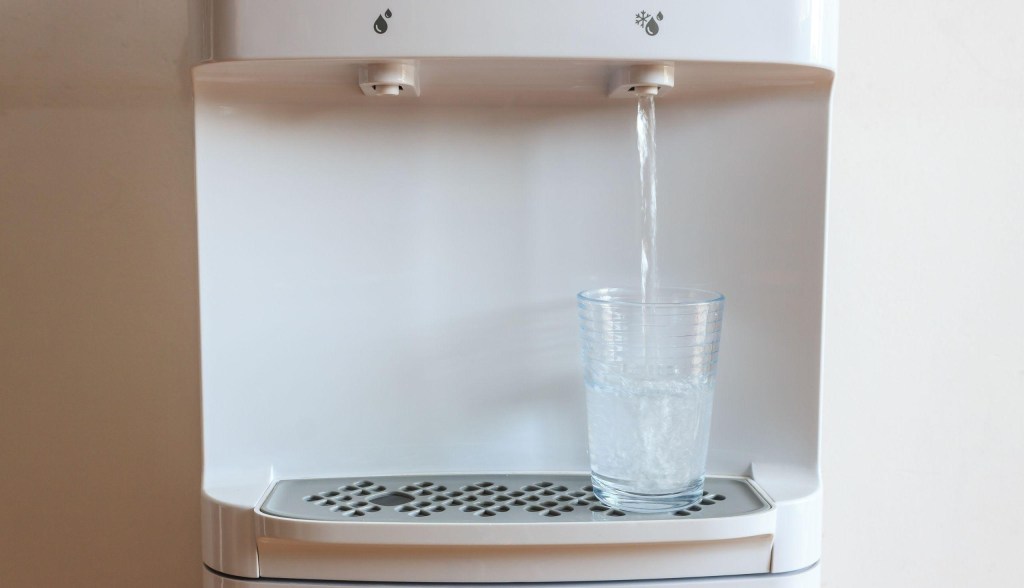
Water coolers are widely used in shared workplaces. Sometimes water spills, people touch the controls, and the drip tray fills up over time. Regular cleaning helps prevent these small messes from becoming bigger problems.
How you clean your water cooler depends on its type. A countertop unit, a freestanding dispenser, a hot-and-cold model, a touchless system, and a reverse osmosis cooler can each have different parts and cleaning requirements. Before you begin, read the manufacturer’s instructions for your model.
What do you need to clean a water cooler?
You only need a few basic supplies to clean a water cooler. For most outside surfaces, a clean microfiber cloth and fresh water are usually enough.
For parts you can remove, you might need a soft sponge or a small brush. If you need a cleaning or sanitizing product, make sure it is approved for your dispenser.
Disposable gloves are useful when cleaning a dirty drip tray or any area where water has collected.
Always check the manufacturer’s instructions before using any cleaning product. Different machines use different materials and parts, so a cleaner that works for one may not be safe for another.
How to clean a water cooler step by step.
These steps provide a general method for cleaning a water cooler. If your model’s instructions differ, be sure to follow them instead.
1. Prepare the water cooler.
First, read the cleaning instructions for your dispenser. If the manufacturer says to turn off or unplug the unit before cleaning, make sure to do that before you start.
Make sure you have enough space to work around the machine. If you see water in the drip tray, remove it carefully before cleaning nearby areas.
Avoid opening the dispenser or removing components unless they’re specifically designed for routine user access.
2. Wipe down the exterior.
Wipe the outside of the water cooler with a clean cloth. Focus on areas people touch often, like the dispensing controls.
For electronic controls or touchscreens, use the cleaning instructions made for those surfaces. Only spray liquid on the machine if the manufacturer says it is safe.
If you use a cleaning product, follow the directions and keep extra moisture away from electrical parts.
3. Clean the dispensing area.
The spot where water exits the machine should be cleaned regularly.
Carefully clean the surfaces you can reach around each water outlet. For the nozzle, follow the manufacturer’s cleaning instructions, as designs may vary.
Do not push brushes or other objects into the water outlet unless your machine’s cleaning instructions say to do so.
4. Empty and clean the drip tray.
If your dispenser has a removable drip tray, take it out. Pour out any water and clean the tray as the manufacturer recommends.
Check corners and grooves for any buildup. After cleaning, let the tray dry as instructed before putting it back.
You may need to clean the drip tray more often than other parts. If it is full or looks dirty, clean it right away instead of waiting for the next scheduled cleaning.
5. Complete approved internal cleaning.
Cleaning instructions for this part can vary widely depending on the water cooler.
Some dispensers have reservoirs or removable parts that users can clean by following certain steps. Other systems are not meant to be opened or cleaned inside by staff.
Bottleless water coolers may have water-line connections and filters inside. Cleaning these parts on the inside is usually done by a professional.
Do not take apart the machine or try to clean inside plumbing or electrical parts unless the manufacturer’s instructions clearly tell you to.
6. Return the water cooler to service.
Make sure any removable components are completely reinstalled before using the dispenser again.
If the cleaning process involves a sanitizing product, complete all required rinsing or flushing steps. Follow the manufacturer’s directions for reconnecting power and restarting the machine.
Allow the water cooler to return to its normal operating condition before employees begin using it again. Heating and refrigeration account for most of a dispenser’s energy draw, so it’s worth understanding how much electricity a water cooler uses.
How to clean a bottleless water cooler.
Bottleless water coolers connect directly to a building’s potable water supply, so there isn’t a water jug to remove during routine cleaning.
Workplace staff can focus on accessible areas such as the dispenser exterior and drip tray. The water outlets should also be cleaned according to the unit’s instructions.
Inside the machine, bottleless systems may contain filtration equipment and components connected to the water line. These areas can have separate service requirements and aren’t necessarily intended for user access.
Filter changes and internal sanitization may be handled during scheduled professional service. This helps ensure that maintenance is completed according to the system’s requirements.
How to clean a bottled water cooler.
Bottled dispensers have an additional area to consider because the water jug connects directly to the machine.
Keep the bottle-loading area clean according to the manufacturer’s instructions. When replacing a bottle, avoid touching surfaces that come into contact with the drinking water.
The exterior and dispensing area require the same routine attention as other water coolers. Removable drip trays should be emptied and cleaned when needed.
If the dispenser requires reservoir cleaning or internal sanitization, follow the procedure provided for that specific machine.
What parts of a water cooler need regular cleaning?
Start with the parts you can see and interact with during normal use.
The dispensing area needs regular attention because cups and bottles are filled there throughout the day. Drip trays should be checked frequently for standing water or residue.
Controls and exterior surfaces can be included in normal workplace cleaning. On bottled units, the bottle-loading area may have additional care requirements.
Internal reservoirs and filtration components follow a different maintenance process. Check the instructions for your dispenser to determine which areas should be cleaned by staff and which are included in professional service.
What should you avoid when cleaning a water cooler?
One of the easiest mistakes to make is assuming that every water cooler can be cleaned the same way. Different materials and internal designs can require different care.
Don’t use a cleaning chemical simply because it’s commonly recommended online. Check that it’s appropriate for your particular dispenser first.
Keep excess moisture away from electrical areas and don’t open parts of the machine that aren’t intended for routine access.
Filters also shouldn’t automatically be washed and put back into the system. Many are designed for replacement according to a service schedule.
If you encounter a leak or mechanical problem while cleaning, stop and have the issue evaluated rather than trying to repair internal components yourself.
How often should you clean a water cooler?
Different parts of the machine may need attention at different times.
Frequently touched surfaces can be cleaned as part of the workplace’s regular cleaning routine. A drip tray should be emptied whenever water begins to collect, rather than waiting for a particular date on the calendar.
Deeper cleaning and sanitization depend on the dispenser and its service requirements. The number of people using the machine can also affect how much routine attention it needs.
Cleaning vs. professional water cooler maintenance.
Everyday cleaning and water cooler maintenance overlap, but they aren’t quite the same job.
Routine cleaning deals primarily with the accessible parts of the machine. It keeps the areas employees regularly use clean and addresses everyday spills or buildup.
Professional maintenance goes inside the system when necessary. Depending on the dispenser, service may involve replacing filters or sanitizing internal components. A technician can also inspect the machine for issues that aren’t visible from the outside, which can play a role in how long a water cooler lasts.
With a bottleless workplace system, having ongoing service can simplify this part of ownership. Staff can handle appropriate day-to-day cleaning, while more involved system maintenance is handled according to schedule.
FAQ.
Can I clean a water cooler by myself?
You can generally handle routine cleaning of accessible surfaces by following the manufacturer’s instructions.
Internal cleaning is more dependent on the dispenser. If a component isn’t intended for user access, leave it in place and have the appropriate service performed professionally.
What should I use to clean a water cooler?
Use cleaning products and tools that are appropriate for the specific water cooler.
Manufacturer instructions should be your first reference. This helps avoid using chemicals or cleaning methods that could damage the dispenser or leave an unsuitable residue on water-contact surfaces.
Can I clean a water cooler with vinegar?
Don’t assume vinegar is suitable for every water cooler. Whether it can be used depends on the manufacturer’s cleaning instructions and the materials in the dispenser.
If the manufacturer specifies a particular sanitizing solution or cleaning method, follow that guidance.
Do water cooler filters need to be cleaned?
Many water cooler filters are designed to be replaced at the end of their service period.
Don’t rinse and reuse a filter unless the filtration system specifically allows it. Follow the replacement schedule provided for your system.
Should I clean a new water cooler before using it?
Follow the installation and first-use instructions for the new dispenser. These will tell you whether any cleaning, flushing, or preparation is required before drinking from the machine.
For professionally installed bottleless systems, setup may include steps to prepare the dispenser for use.
Take the hassle out of water cooler maintenance.
A clean water cooler is easier to manage when everyone knows which tasks belong in the regular workplace routine and which are handled through scheduled service.
Culligan Quench provides bottleless water coolers for Canadian workplaces with professional installation and ongoing service. With the right system and support in place, your team can focus on keeping the everyday touchpoints clean while more involved maintenance is handled when it’s due.
Explore Culligan Quench water solutions or speak with a Water Expert about a dispenser that fits your workplace.
Recommended products
Culligan Quench has an advanced suite of point-of-use systems that are designed to meet the needs of workplaces of all shapes and sizes. Here are some products we recommend for your business.
570 Bottleless Water Cooler
Vivreau® Freestanding Main Bottler
 High
 Hot
 Cold
 Ambient
 Extra Hot
 Sparkling

Q10 Bottleless Water Cooler With Sparkling Water
Includes Firewall® UV Protection
High
Hot
Cold
Ambient
Extra Hot
Sparkling
Top pick

Q12 Touchless Bottleless Water Cooler
Available with quenchWATER+ electrolyte water
 Commercial
Hot
Cold
Ambient
Extra Hot
Sparkling
Top pick

Q14 Bottleless Water Cooler
Available with quenchWATER+ electrolyte water
Commercial
Hot
Cold
Ambient
Extra Hot
Sparkling
Top pick

Q3 Bottleless Water Cooler
Available with quenchWATER+ electrolyte water
 Standard
Hot
Cold
Ambient
Extra Hot
Sparkling

Q4 Touchless Bottleless Water Cooler
Available with quenchWATER+ electrolyte water
Standard
Hot
Cold
Ambient
Extra Hot
Sparkling

Q5 Bottleless Water Cooler
Available with quenchWATER+ electrolyte water
High
Hot
Cold
Ambient
Extra Hot
Sparkling

Q8 Touchless Bottleless Water Cooler
Available with quenchWATER+ electrolyte water
High
Hot
Cold
Ambient
Extra Hot
Sparkling
Q9 Bottleless Water Cooler
Includes Firewall® UV protection
High
Hot
Cold
Ambient
Extra Hot
Sparkling

Replacement Filter for Bottleless Water Cooler
Model P02800 1 micron lead reduction block filter
High
Hot
Cold
Ambient
Extra Hot
Sparkling
