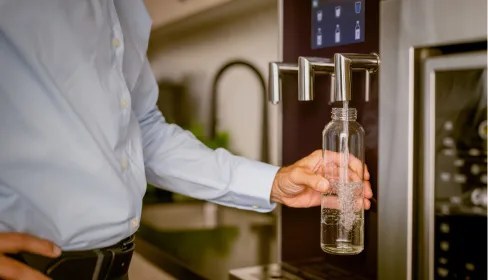
Yes, water coolers need regular cleaning. They’re shared appliances that people use throughout the day, so areas around the dispenser naturally collect drips, dust, and residue over time.
Keeping a water cooler clean also helps the machine stay in good working condition. The exact care it needs will depend on the type of dispenser, how often it’s used, and the manufacturer’s recommendations.
Why water coolers need regular cleaning.
Think about how often people interact with an office water cooler. Employees fill cups and reusable bottles, press buttons, and occasionally spill water around the machine. Even with careful use, it doesn’t stay spotless on its own.
The dispensing area deserves particular attention because it’s where drinking water leaves the machine. Drip trays and controls also need routine care as part of normal workplace cleaning.
There are internal components to consider as well. Depending on the type of water cooler, periodic maintenance may involve sanitizing or replacing filters. Some of these tasks are better handled during professional service rather than everyday office cleaning.
What parts of a water cooler need to be cleaned?
Different parts of a water dispenser have different maintenance needs. Some are easy to include in regular workplace cleaning, while internal components should be handled according to the manufacturer’s instructions.
Dispensing area
The dispensing area is one of the most important places to keep clean. It’s used every time someone gets water, and reusable bottles or cups may occasionally come into contact with the nozzle.
Wipe accessible dispensing surfaces as recommended for your machine. Avoid inserting cleaning tools into the nozzle or removing parts unless the manufacturer specifically instructs you to do so.
Drip tray
The drip tray catches the water that doesn’t make it into a cup or bottle. Over time, that moisture can leave behind residue.
Empty the tray as needed and clean removable components according to the dispenser’s instructions. If you notice water collecting in the tray, there’s no reason to wait until the machine’s next scheduled maintenance.
Exterior surfaces
Buttons and other frequently touched parts of a water cooler can become dirty through normal use. They can usually be incorporated into the workplace’s regular surface-cleaning routine.
Pay attention to the instructions for electronic controls or touchscreens. Cleaning products should always be appropriate for the surface you’re wiping.
Internal components
Internal water cooler cleaning is more dependent on the machine itself. Reservoirs and water lines aren’t necessarily designed to be accessed by the people using the dispenser.
Bottleless systems may also contain filtration equipment that follows its own maintenance schedule. Internal sanitization and other service tasks should be completed in accordance with the manufacturer’s recommendations.
Do bottleless water coolers need to be cleaned?
They do. Connecting a dispenser directly to the water supply eliminates the need to handle large water jugs, but the machine still requires routine maintenance.
The areas employees interact with should be kept clean just as they would with another shared appliance. Bottleless water coolers also have internal systems that may require scheduled service.
If the dispenser includes water filtration, its filters need to be replaced according to the requirements of that particular system. Filter replacement isn’t the same as cleaning the cooler, though both are part of properly maintaining a bottleless dispenser.
Do bottled water coolers need to be cleaned?
Bottled water coolers also need regular attention. Replacing the bottle doesn’t clean the dispenser itself.
Along with the dispensing area and drip tray, a bottled machine may have surfaces around the bottle connection that require cleaning. The water reservoir may also have specific sanitization requirements.
Follow the cleaning procedure provided for your particular dispenser, especially before accessing any area that comes into direct contact with the water supply.
How often should you clean a water cooler?
There isn’t one cleaning schedule that works for every water cooler.
A busy dispenser in a large workplace may need more frequent surface cleaning than one used by a small team. Some areas also need attention more often than others. A wet drip tray, for instance, shouldn’t be left until a scheduled deep cleaning.
Internal cleaning and sanitization can follow a different schedule. The manufacturer’s instructions and service recommendations should determine how those parts of the machine are maintained.
Can you clean a water cooler yourself?
Routine cleaning of accessible areas can often be handled by workplace staff. Wiping the exterior and cleaning a removable drip tray are good examples, provided the manufacturer’s directions are followed.
Internal maintenance is a different job. Opening the dispenser or attempting to clean plumbing, refrigeration, or electrical components can damage the machine and pose a safety risk.
If the system requires internal sanitization or filter service, follow the recommended maintenance procedure for that model. A service technician can handle tasks that aren’t intended for the user.
Water cooler maintenance goes beyond cleaning.
Cleaning is one part of taking care of a water cooler. The machine itself also needs to be maintained so it continues working as intended.
A filtered bottleless system will eventually need new filters. The dispenser may also require periodic inspection or sanitization, depending on its design and service requirements.
Pay attention to how the machine is performing between scheduled service visits. A leak or a sudden dispensing problem shouldn’t be treated as something that will disappear after the cooler is cleaned.
Following the recommended maintenance schedule also allows technicians to address system components that aren’t accessible during routine workplace cleaning.
FAQ
What happens if a water cooler isn’t cleaned?
Dust and residue can build up around the areas people use most frequently. Water can also sit in a neglected drip tray, leaving the dispenser looking and feeling less clean.
Skipping recommended internal maintenance may also affect how well the system operates over time. Routine care helps prevent small maintenance tasks from being ignored until they become larger ones.
Do bottleless water coolers require less maintenance?
Bottleless water coolers eliminate tasks associated with receiving, storing, and changing water jugs. They still require cleaning and system maintenance.
For filtered models, that includes replacing filters according to the appropriate service schedule. The dispenser itself also needs routine cleaning.
Should you clean a water cooler after changing the bottle?
Changing the bottle and cleaning the water cooler are separate tasks. Whether additional cleaning is recommended during a bottle change depends on the particular dispenser and its care instructions.
Follow the manufacturer’s cleaning and sanitization schedule rather than assuming every bottle replacement requires the same procedure.
Do water cooler filters need to be cleaned?
Many water cooler filters are designed to be replaced rather than washed and reused. The correct procedure depends on the filtration system.
Make water cooler maintenance easier for your workplace.
Keeping a shared water dispenser clean shouldn’t have to become another complicated office chore. Choosing a system with appropriate service support can take some of the maintenance burden off your staff.
Culligan Quench provides bottleless water coolers for workplaces throughout Canada, along with installation and ongoing service. Available systems include different filtration options like reverse osmosis water filters and dispenser configurations to fit the needs of the space, such as our countertop water dispensers or freestanding water dispensers.
